Skip to content
Get a Quote
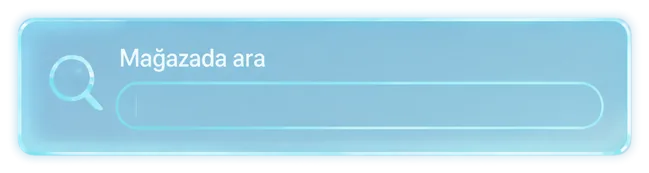
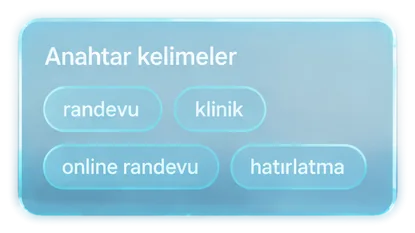
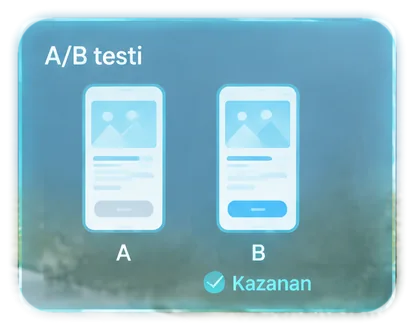
A phone on a marble table on a Mediterranean terrace with a sea view: an appointment app ranks first in store search, and its store listing shows Install and Open; beside it, holographic panels for the store search bar, keywords and A/B testing
Module 02 · Mobile Apps

App Store Optimization (ASO) Services for the App Store and Google Play

Our app store optimization service works to lift your app in App Store and Google Play search results. Along the same pipeline, we steer your download campaign towards the right audience. We also track whether the people who download your app keep using it. In short, we combine App Store optimization, Google Play optimization and app marketing in a single process.

In depth
01

Keywords, Copy and Visuals: What Does Our App Store Optimization Service Cover?

In ASO, the first job is to organize the signals that reach the store algorithm. The algorithm uses these signals to decide which searches your app appears in. That's why we build the title, subtitle and description fields by comparing them with the keyword gaps your competitors leave.

In the same way, we choose the category and localization settings by looking at how people search in the target market. Store visuals, meanwhile, are more than an aesthetic choice. The screenshot order, the message in the first frame and the opening of the video all directly shape the decision to download. That's why we compare combinations of icon, title and screenshots through A/B testing. When the test ends, we put the winning variant live. That way, every decision on your store listing comes from a test result instead of a guess.

02

Beyond Store Visibility: Download Campaigns and Retention

After launch, we deliberately avoid tying download volume to a single channel. For example, we reach users with high search intent through Google Ads app campaigns. On Meta Ads, we build broad awareness through lookalike audiences and interests.

Then we rebalance the budget across channels based on campaign results. But our measurement doesn't end with the download. That's why we set up event tracking and deep-linking infrastructure. In other words, we flag sign-up, first action and reopening the app as separate steps. As a result, the cohort table shows the step at which users abandon the app. We then plan the notifications and in-app messages that improve retention around this data. The limits of each store field are spelled out one by one in the App Store product page guidelines, so we leave nothing to guesswork.

03

Our App Store Optimization Process

We run our ASO service as a six-step cycle. Store search and competitors' keywords keep changing, so your store listing has to stay current too. That way, the output of each step becomes the input for the next round.

  1. First, we scan competitors' store titles, subtitles and descriptions.
  2. Next, we rank the untapped keyword opportunities by priority for your store copy.
  3. We set the category and localization settings to match search behaviour in the target market.
  4. After that, we compare icon, screenshot and preview video variants through A/B testing.
  5. Once the app goes live, we launch the download campaign on Google Ads and Meta Ads.
  6. Finally, we report the results and rebalance the budget for the next period.

So ASO is not a one-time setup; it is a recurring cycle of improvement.

01 Store listing Store listing: a mock-up marking the title, subtitle, keyword and screenshot areas — illustrative graphic A mock-up of a store product page inside a phone frame. At the top is a search field with a typed keyword and a cursor. Below it sit a square app icon with two bars beside it. Under those are three small screenshot cards in a horizontal scroll, plus a scroll indicator. Next come description bars and an install button. On the right, four labels connect to their areas with thin dashed lines: Keyword, Title, Subtitle, Screenshot. Rating, stars and download count are deliberately left out. In the animation, the frame appears, the sections enter from top to bottom and the labels connect last. Store listing ASO Install Keyword Title Subtitle Screenshot
02 Channel choice Channel choice: arrows from three channels entering a single app node — illustrative graphic On the right, a single node labelled "App". On the left, three channel boxes stacked vertically: ASO with store search, Google Ads with search intent, and Meta Ads with interests and lookalike audiences. The Meta Ads box carries both targeting rows; lookalike audiences are drawn as a Meta Ads targeting row, not as a separate channel. An arrow runs from each box into the node. The arrows differ in thickness but deliberately carry no numbers or percentages, because this page publishes no channel shares. At the top is a "budget split" label; at the bottom, a single line: Never tied to one channel. In the animation, the node appears, the boxes enter from top to bottom and the arrows draw in sequence. Channel choice budget split App ASO store search Google Ads search intent Meta Ads interests lookalikes Never tied to one channel
03 Retention Retention: a retention curve sloping down along a time axis, with cohort steps — illustrative graphic A curve sloping down from left to right along a time axis, with the area beneath it hatched. The curve has four marker points, each with an empty bar label above it; day or week labels are deliberately omitted. On the right is a small card titled "Retention", with a dash instead of a value. At the bottom are the cohort steps: sign-up, first action, reopen. The last line reads: Measurement doesn't end at download. The curve shows shape only, not a rate or a measured value. In the animation, the axis appears, the curve draws from left to right, and the hatched area and marker points follow. Retention curve Retention — sign-up first action reopen Measurement doesn't end at download
Illustrative graphic. It maps the three stops on this page. At the first stop, we organize the copy, keyword and screenshot areas of the store listing. At the second, we don't tie downloads to one channel; we add Google Ads and Meta Ads alongside ASO. Lookalike audiences, in other words, are not a separate channel but a Meta Ads targeting row. The third stop shows that we track post-download retention through cohort steps. The interfaces in the boxes don't come from a real store; we used bars in place of the app and developer names. We deliberately left out the rating and the download count. The arrow thickness is not a share or a ranking; it shows that we redistribute the budget across channels. The curve, too, shows shape only. That's why we left the marker points empty and put a dash on the card instead of a value.

For the current price and timeline range, see the pricing section on our Mobile Apps page — you can pin down the range for your scope in two minutes.

Prepared by: TasarımMania Mobile App Team · Last updated: 21 October 2026

Let's map the scope togetherFive steps, two minutes. Your timeline and price range appear on screen.

FAQs

Frequently asked questions: app store optimization

What does your app store optimization service cover?

It covers everything from icon and screenshot design to keyword placement. Category selection and user review management are also parts of the store listing that influence search. On top of that, we regularly scan for keyword gaps against what competitors cover.

Will my app show up in the store without ASO?

Technically, it will be listed in the store, but you can't expect it to stand out for the keywords competitors have optimized. In most cases, only users who type its exact name will see it.

What do you do to drive downloads after the app goes live?

Alongside the ASO work, we launch a paid download campaign. We set up Google Ads and Meta Ads campaigns separately, based on the audience's search intent or interests. Then we redistribute the budget across channels according to performance.

Are store visuals and the preview video included in the ASO service?

Visual production and video production are line items that vary with the package you choose. That's why we confirm which visual set is included at the quote stage. You can see the exact scope in the pricing section.

Do you run the download campaign on Google Ads or Meta Ads?

We use both, because each does a different job. Google Ads captures users with high search intent. Meta Ads, by contrast, delivers broad awareness and lookalike audience targeting. We set the campaign mix based on your app's category and your audience's behaviour.

How do you measure whether people keep using the app after downloading it?

With event tracking in place, we record sign-up, first action and return visits as separate steps. Cohort analysis then shows us the retention curve and the step where the drop-off begins.

Why does an ASO service need A/B testing?

Because we can't guess which icon, title or screenshot will bring more downloads. So we compare the variants and put the winner live.

Which fields matter for store visibility?

The title, subtitle and description fields are decisive in search. The icon, screenshots, category and user reviews are on this list too. We set the field limits according to the App Store product page guidelines.

Details

If you'd like to look before deciding

  1. 01

    Keyword and Competitor Analysis

    In our ASO service, we first study the store copy of competing apps and find the keywords they leave open. We then turn that list into a priority plan showing the order in which those keywords enter your store copy.

  2. 02

    Visual Set and Video Production

    We design the icon variants, screenshot order and preview video script to win the first reaction. Then we pit the variants against each other in an A/B test. The visual set with the best result stays in the store.

  3. 03

    Campaign and Retention Reporting

    You see campaign results by channel and the retention cohort in the same report. This view makes it easier to decide which channel the budget should go to.

LIVE LOOP

Make Your App Visible in the Store

Let's run your store visuals, download campaign, retention and app store optimization with one team and one plan. Talk to our team first; then we'll map out the scope and a plan tailored to you together. You can find pricing details in the pricing section.